
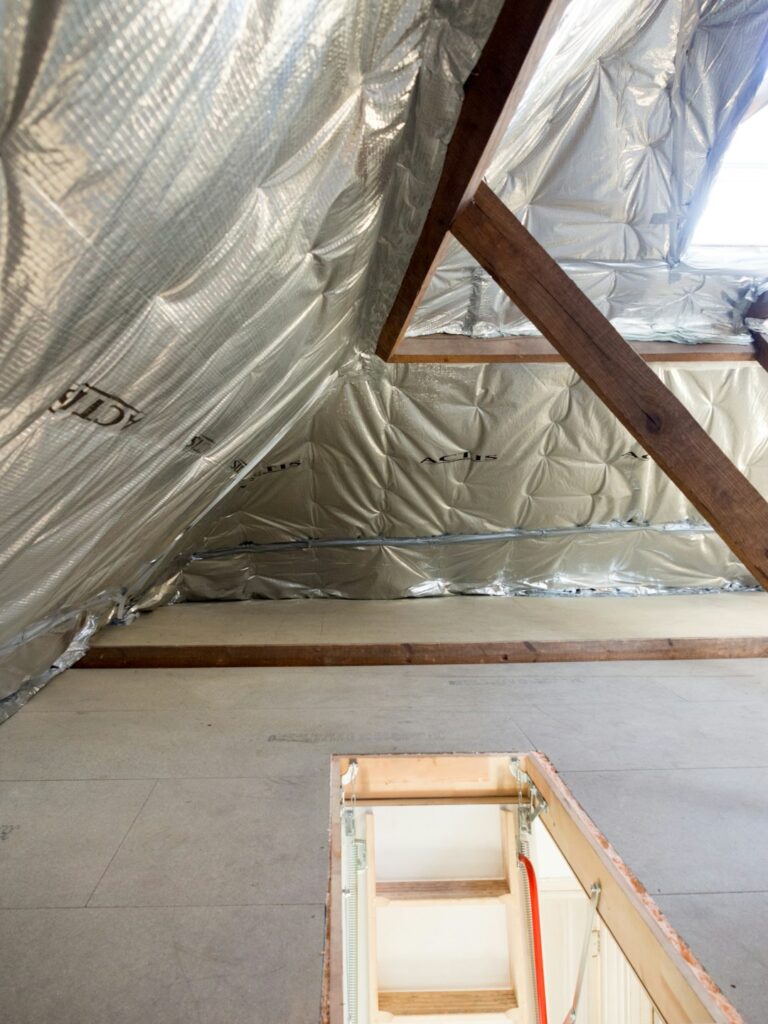
Can a roof replacement reduce energy bills?
Yes, replacing an aging roof can help lower heating and cooling costs, but the savings usually come from the entire roof system rather than the shingles alone. Better attic insulation, improved air sealing, proper ventilation, and lighter or more reflective roofing materials can all affect how much energy a home uses.
In Clifton Springs, seasonal temperature swings make the roof and attic important parts of the home’s thermal performance. Cold winters increase heating demand, while sunny summer days can cause an overheated attic and place additional strain on air-conditioning equipment.
A new roof will not correct every cause of high utility bills. However, it can address problems that allow conditioned air to escape or outdoor temperatures to move too easily into the living space.
How does an old roof affect energy use?
An older roof may contribute to higher energy bills in several ways. Damage, aging materials, and past repairs can create openings where air and moisture move through the roof assembly.
Common problems include:
- Missing or damaged shingles that allow water intrusion
- Deteriorated flashing around chimneys, vents, and roof edges
- Gaps around attic penetrations
- Compressed, wet, or insufficient insulation
- Blocked soffit vents or poorly balanced attic ventilation
- Dark roof surfaces that absorb substantial solar heat
- Multiple roof layers that add weight without improving insulation
The shingles themselves are only the outermost layer. Energy performance depends on what is beneath them, including the roof deck, underlayment, insulation, air barrier, and ventilation channels.
A roof can appear reasonably intact from the ground while still allowing significant heat loss through the attic. This is one reason utility costs alone cannot prove that a roof needs replacement. The same symptoms may come from inadequate insulation, duct leakage, air leaks, inefficient heating equipment, or drafts around windows and doors.
Why does attic insulation matter so much?
In many homes, the attic is the most practical place to improve the boundary between indoor and outdoor temperatures. Heat naturally moves toward colder areas during winter, so warm indoor air can escape through gaps in the ceiling and attic floor. During summer, solar-heated roof materials can raise attic temperatures and increase heat transfer into the rooms below.
A roof replacement may provide an opportunity to inspect and improve:
- The depth and condition of existing insulation
- Air leaks around light fixtures, plumbing, wiring, and ducts
- Ventilation paths from the eaves toward the roof ridge
- Moisture damage caused by roof leaks or condensation
- Areas where insulation has been displaced or compacted
Insulation and air sealing perform different jobs. Insulation slows heat movement, while air sealing limits the uncontrolled movement of air. Adding insulation without addressing major air leaks may produce less improvement than expected, especially if warm, moist air is entering the attic during winter.
Can roof ventilation lower heating and cooling costs?
Proper ventilation can help manage attic temperature and moisture, but it is not the same as air-conditioning the attic. A well-designed ventilation system allows outdoor air to enter through lower roof openings and exit through higher openings. This can reduce trapped heat during summer and help remove moisture under suitable conditions.
Ventilation may also help protect roofing materials from premature deterioration. Excess moisture in an attic can contribute to mold, wood decay, damp insulation, and frost accumulation during cold weather.
More ventilation is not automatically better. Unbalanced or improperly installed vents can draw conditioned air from the house into the attic, increasing energy loss. Ventilation openings should work with continuous insulation and air sealing rather than substitute for them.
Do lighter-colored or reflective roofs save energy?
Roof color and surface reflectivity can affect summer heat gain. A lighter or more reflective surface generally absorbs less solar energy than a very dark surface, which may help keep the roof deck and attic cooler during sunny weather.
The benefit depends on several factors:
- Roof orientation and sun exposure
- Amount of attic insulation
- Presence and quality of ventilation
- Whether the home has air conditioning
- Roof pitch and surrounding shade
- The type and reflectivity of the roofing material

For a home with a well-insulated attic, the energy difference caused by roof color may be modest. Insulation and air sealing often have a greater effect on winter heating performance than surface color. Reflective materials can still be useful in reducing summer heat gain, particularly where attic insulation is limited or air-conditioning demand is significant.
How much can a homeowner expect to save?
There is no reliable single savings figure for every roof replacement. The result depends on the home’s size, age, construction, existing insulation, heating fuel, air-conditioning use, roof condition, and weather patterns.
A replacement may produce little noticeable change in energy bills if the old roof was already watertight and the attic was properly insulated. Larger improvements are more likely when the project also corrects major air leakage, replaces wet insulation, restores ventilation, or addresses damaged areas that have reduced the effectiveness of the building envelope.
Energy savings should also be measured over comparable periods. A mild winter, a hot summer, changes in thermostat settings, utility rates, and household occupancy can make year-to-year comparisons misleading.
Does a new roof help more in winter or summer?
The answer depends on the home’s existing weaknesses. In winter, the main opportunity is usually reducing heat loss through the ceiling and attic. Air sealing and adequate insulation are especially valuable in a cold, windy climate.
In summer, the roof can influence attic temperatures and cooling demand. Reflective materials, proper ventilation, and sufficient insulation may reduce the amount of heat transferred into upper rooms.
Homes with finished attics require special care. Insulation must be placed along the correct roof or ceiling surfaces, and ventilation paths must not be blocked. A solution that works for an unfinished attic may not be appropriate for a finished living area beneath the roof.
What should be checked before replacing a roof?
A roof replacement should be evaluated as part of the home’s complete upper boundary, not as an isolated layer of shingles. Useful questions include:
- Is the attic insulation deep, dry, and evenly distributed?
- Are there visible daylight gaps or air leaks?
- Is moisture present on roof decking, nails, or insulation?
- Are soffit and ridge ventilation paths open and balanced?
- Are bathroom or kitchen exhaust fans venting outdoors rather than into the attic?
- Are ducts located in the attic properly sealed and insulated?
- Are there signs of ice dams, wind damage, or recurring leaks?
- Could roof replacement affect existing insulation or attic finishes?
Some inspections involve confined spaces, unstable surfaces, electrical hazards, or possible structural damage. Those conditions require appropriate safety measures and qualified evaluation rather than an informal attic inspection.
What is the most common misconception?
The most common misconception is that new shingles automatically make a home energy efficient. Shingles provide weather protection, but they are not a replacement for insulation or air sealing.
Another misconception is that attic ventilation alone will solve high energy bills. Ventilation can support moisture control and summer heat management, but it cannot compensate for missing insulation, large air leaks, or poorly sealed ducts.
The strongest energy-related results usually come from coordinating the roof covering with the attic floor, roof deck, insulation, ventilation, and interior ceiling. For local households, this whole-system approach is more useful than choosing a roof material based only on appearance or advertised energy claims.
