
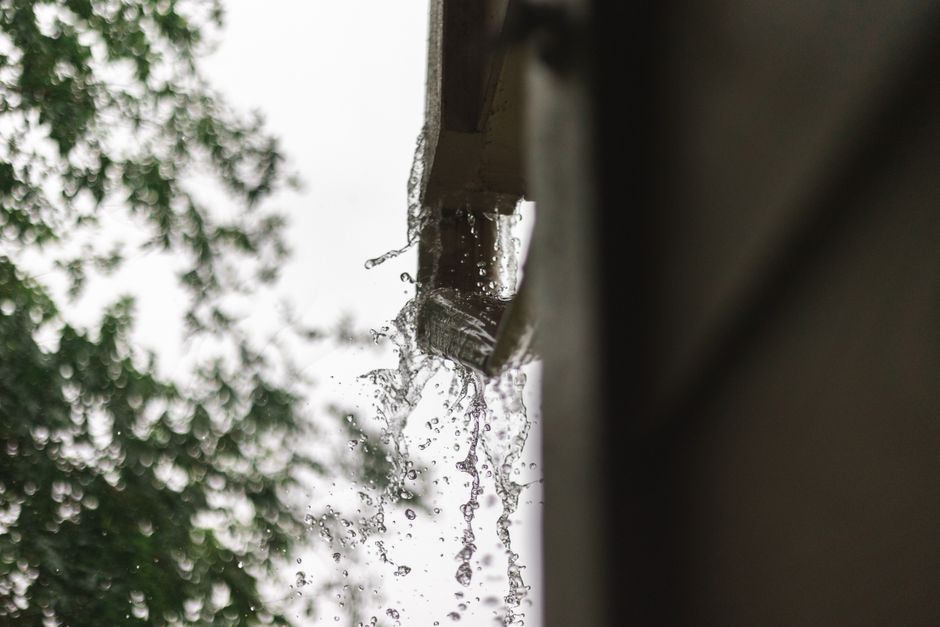
Why do clean gutters matter to a roof?
Clean gutters help move rainwater and melting snow away from the roof, walls, foundation, and landscaping. When gutters become blocked, water can back up beneath roofing materials, collect along the roof edge, and create conditions that shorten the life of the roof.
For homes in Clifton Springs, NY, regular gutter cleaning is especially useful because roofs may receive heavy rain, wet snow, windblown leaves, and ice during different parts of the year. A gutter system that works well in autumn may still have problems after winter weather or spring storms.
Gutters are not separate from the roofing system. They are part of the way a home manages water. If they cannot carry water away efficiently, the roof edge and the materials beneath it may absorb more moisture than they were designed to handle.
How can clogged gutters damage roofing materials?
A clog usually begins with leaves, twigs, seed pods, and roof granules. Over time, these materials can form a dense blockage that prevents water from reaching the downspouts. During a storm, water then rises inside the gutter or spills over the front and back edges.
This overflow can affect the roof in several ways:
- Water may soak the fascia board behind the gutter.
- Moisture can reach the roof edge and underlying wood.
- Repeated wetting can cause wood to swell, soften, or decay.
- Ice may form along the eaves during freezing weather.
- Overflowing water can stain or damage siding and trim.
- Excess moisture can contribute to mold or mildew in poorly ventilated areas.
A roof does not have to leak through the center of a shingle field for gutter problems to be involved. Damage often begins at the edges, where the roof, flashing, fascia, soffit, and gutter meet.
Can overflowing gutters cause roof leaks?
Yes. Overflowing gutters can contribute to roof leaks, particularly near eaves, valleys, roof-wall intersections, and areas where flashing is already worn or improperly sealed.
Water that backs up against the roof edge may move beneath shingles or behind flashing. If the roof deck or underlayment stays damp, deterioration can develop gradually. The first signs may appear indoors as a small ceiling stain, peeling paint, damp insulation, or a musty odor. In some cases, the interior symptom appears long after the original gutter overflow.
Gutter overflow does not prove that the roof itself is defective. It may be one part of a larger drainage problem. Other causes can include damaged flashing, ice buildup, missing shingles, inadequate roof slope, blocked downspouts, or poor attic ventilation.
Why are autumn leaves and winter ice a concern?
Autumn debris is a common source of gutter blockage. Even homes without large trees may receive leaves carried by wind from nearby properties or wooded areas. Debris can settle in gutter corners, under roof valleys, and around downspout openings.
Winter creates a different set of concerns. Snow and ice can fill gutters, restrict drainage, and add weight to the gutter system. When water freezes and expands, it can separate joints, loosen fasteners, or push against the roof edge. Repeated freezing and thawing may also worsen small cracks and gaps.
Ice dams are another possible issue. An ice dam forms when heat escaping through the roof melts snow on the upper roof surface, allowing water to run downward and refreeze near the colder eaves. Clogged gutters do not create every ice dam, but blocked drainage can make the resulting water harder to discharge safely.
Proper attic insulation and ventilation are important parts of ice-dam prevention. Cleaning gutters alone cannot correct heat loss through the roof.
How often should gutters be cleaned?
Many homes need gutter cleaning at least twice each year: once in late spring and again after most leaves have fallen in autumn. Some properties need more frequent attention if they have many mature trees, a complex roofline, steeply pitched sections, or gutters that collect roof granules and organic debris quickly.
A practical schedule may include:
- A spring inspection after snow and ice have cleared.
- A late-summer check for plant growth, sediment, or bird nesting.
- An autumn cleaning after the main leaf drop.
- A winter inspection from the ground for sagging, ice buildup, or overflow marks.
The right schedule depends on the property. Gutters should also be checked after unusually strong storms, especially if wind has moved branches onto the roof or damaged downspouts.
What signs suggest a gutter problem is affecting the roof?
Some warning signs are easy to see from the ground. Others require a closer inspection from a safe position or from inside the attic.
Watch for:
- Gutters that sag or pull away from the fascia.
- Water stains beneath the roof edge.
- Shingles that appear lifted, curled, or unusually dark near the eaves.
- Peeling paint or soft wood on fascia and trim.
- Water marks on siding below a gutter joint.
- Puddles or erosion beneath downspout outlets.
- Granules collecting in the gutter after roof work or severe weather.
- Damp insulation, stains, or daylight visible in the attic.
- Ice buildup along the lower edge of the roof.
A single sign does not identify the exact cause. However, several signs appearing together suggest that roof drainage should be evaluated rather than ignored.
Is gutter cleaning safe to do yourself?
Gutter cleaning can be hazardous because it often involves ladders, slippery surfaces, overhead electrical lines, and unstable footing. Wet leaves and ice increase the risk. A person should not climb onto a roof or use a ladder on uneven ground simply to remove a minor blockage.
If cleaning is done by a homeowner, basic precautions include using stable equipment, maintaining three points of contact on a ladder, avoiding work during rain or high winds, and keeping clear of electrical lines. Long-handled tools may reduce the need to climb, but they do not eliminate the risk of falling debris or hidden roof damage.
Professional help may be appropriate when the roof is steep, the building is more than one story, ice is present, electrical hazards are nearby, or the gutter system is pulling away from the structure. Safety takes priority over completing seasonal maintenance immediately.
What should be checked besides the gutters?
Cleaning the channel is only part of maintaining roof drainage. Downspouts should be checked to confirm that water can pass through without backing up. Extensions or splash blocks should direct water far enough away from the foundation to prevent pooling.
The attachment points also deserve attention. Loose spikes, separated seams, sagging sections, and damaged end caps can allow water to escape before reaching the downspout. Roof valleys should be free of heavy debris, but removing material from a roof can damage shingles if done carelessly.
It is also useful to look at the relationship between gutters and nearby trees. Branches that rub against the roof can damage shingles, while overhanging limbs can fill gutters rapidly and drop debris onto the roof surface.
How does regular cleaning protect the life of a roof?
Regular cleaning does not make roofing materials last forever, and it cannot correct poor installation or severe storm damage. It does, however, reduce the time that water remains against vulnerable roof edges and helps reveal small problems before they become larger ones.
For area households, the most useful approach is a seasonal inspection routine: clear debris, confirm that downspouts drain freely, look for roof-edge damage, and pay attention to moisture signs in the attic and upper walls. Keeping gutters functional supports the roof’s drainage design and reduces avoidable stress on the materials that protect the home.
